Induction Zones Revolutionize Flexible Kitchen Cooktops
Homeowners who cook frequently understand that the kitchen layout and cooking surface significantly influence the overall experience. The stovetop serves as the central element of that space. For many years, options remained constrained by fixed burner sizes and inflexible arrangements. While induction cooking introduced improvements, the latest development in induction zones fully redefines adaptability and accuracy on contemporary cooktops.
Professionals who install, repair, and remodel kitchens observe how these systems enhance not only cooking methods but also overall kitchen functionality. Individuals undertaking remodels now access a degree of versatility previously available only in professional settings.
Limitations of Traditional Cooktops
Conventional gas and electric cooktops feature predetermined burner positions. Users must conform to the manufacturer's specified design. Cookware varies widely in form and dimension, yet fixed burners seldom accommodate every variation.
Professionals encounter frequent frustration from clients due to these constraints. Oversized griddles or elongated roasting pans extend across multiple burners. Compact saucepans receive inconsistent heating when positioned off-center. Even early induction models, despite superior efficiency over gas or electric alternatives, relied on static circular areas. This led to energy inefficiency and irregular cooking results when cookware dimensions mismatched the zones.
Such discrepancies pose significant challenges during renovations. A homeowner might select an elegant induction surface, only to discover persistent limitations in cookware utilization. Induction zones address this issue comprehensively.
Functionality of Induction Zones
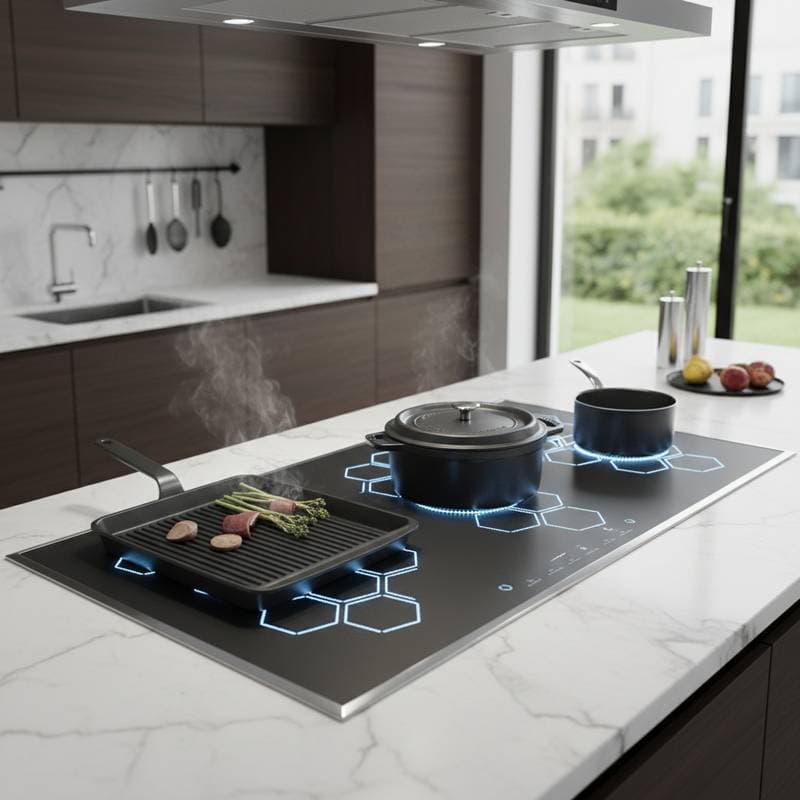
Induction zones supplant rigid burners with adaptable cooking regions that sense and react to cookware dimensions and placement. Rather than restricting users to isolated circular elements, the cooktop employs a network of compact electromagnetic coils. Upon placing a pot or pan, sensors pinpoint its location and energize solely the underlying coils.
These areas detect several items simultaneously or merge to form expansive heating zones for larger vessels like griddles. The cooktop thus conforms to user needs rather than imposing restrictions.
In practical installations, this adaptability reshapes kitchen planning. Homeowners escape the necessity of selecting among four or five preset burners. The full cooking area becomes customizable for each culinary task. This represents a genuine evolution toward modular cooking, where space and utility align with daily requirements.
Importance of Adaptability in Everyday Kitchens
Cooking routines vary daily. One evening might involve a rapid stir-fry, while the next demands simultaneous preparation across multiple vessels for a family gathering. Preset burners hinder such versatility. Induction zones provide complete command over utilized surface area and positioning.
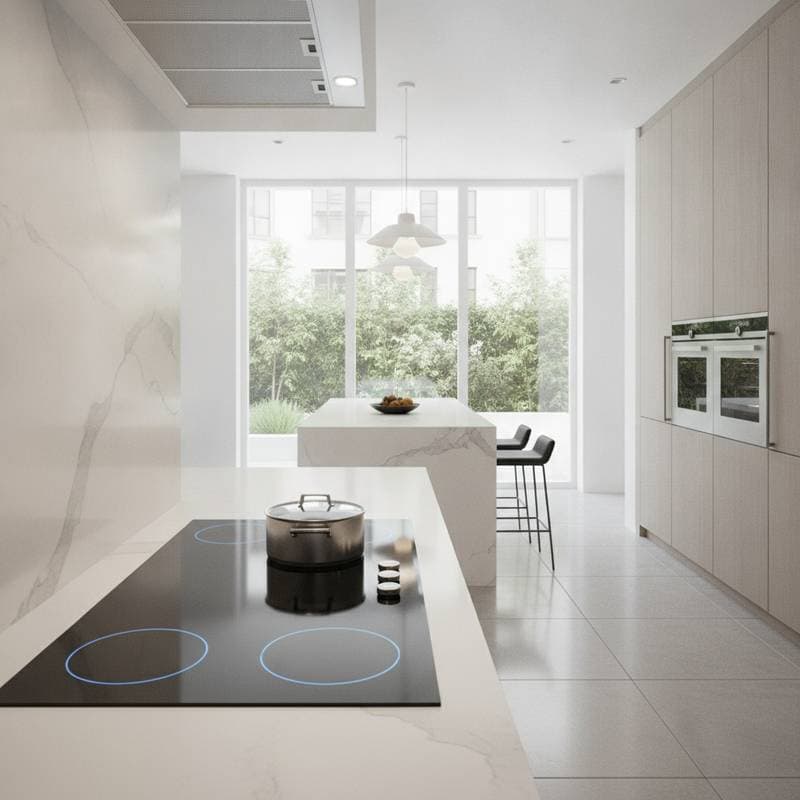
For contractors, this feature simplifies design processes. Consider a renovation featuring a seamless, flush-mounted cooktop on an expansive island, devoid of knobs or protrusions for a streamlined appearance. The client favored cooking with substantial cast-iron skillets. A zoned induction solution proved ideal, offering a flawless surface capable of managing diverse cookware without compromising efficiency.
Key Technical Aspects for Homeowners
Prospective buyers benefit from grasping the underlying mechanics of induction zone cooktops. These units utilize numerous independent induction coils instead of a limited number of sizable ones. Activation occurs only as required, enhancing efficiency and enabling dynamic responses.
The control mechanism constitutes the primary advancement. It perpetually tracks temperature and cookware location, modulating power to ensure uniform heating. Moving a pan prompts automatic heat transfer. This sophistication demands sophisticated electronics and meticulous calibration, contributing to elevated initial expenses.
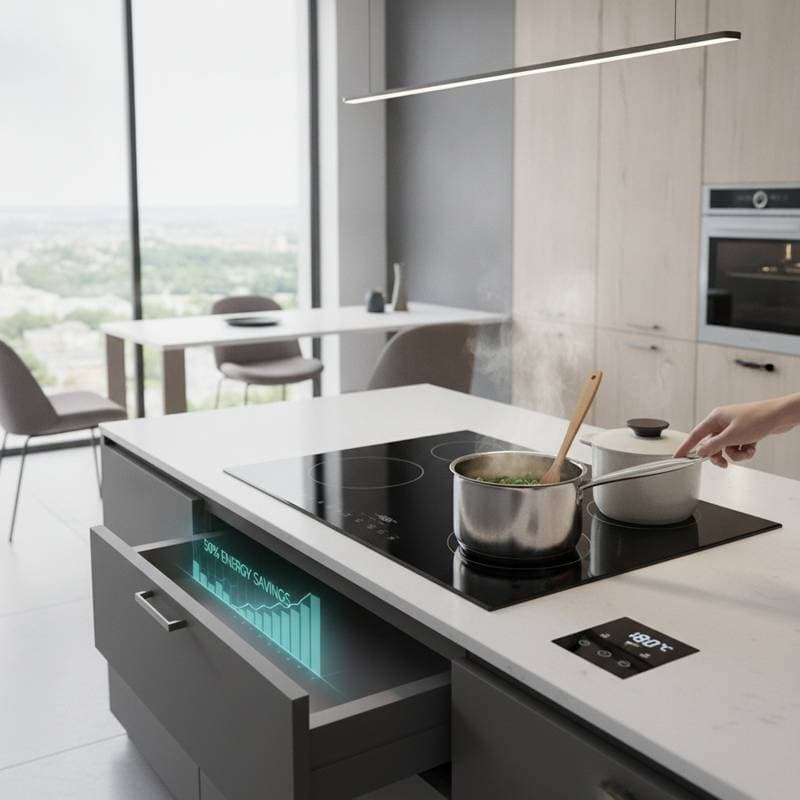
Nevertheless, considerations of energy conservation, accelerated cooking durations, and minimized heat dissipation often offset costs over time. Numerous clients report reduced utility expenses shortly after installation.
Addressing Common Misconceptions
Several misunderstandings persist regarding induction zones. Clarification proves beneficial.
-
Compatibility with Cookware. Induction technology necessitates magnetic materials, such as cast iron or specific stainless steel varieties. Non-magnetic options like aluminum, copper, or glass require induction-suitable bases to function. Verify cookware specifications prior to use.
-
Ease of Operation. Advanced engineering does not equate to complexity in handling. Contemporary units typically feature touchscreen interfaces or digital sliders for effortless power modulation. Familiarity develops quickly, often surpassing the simplicity of gas range knobs.
-
Durability Concerns. The glass exterior withstands regular use but demands care. Advise against sliding heavy pots or placing hot items directly on it. Routine maintenance ensures longevity without complications.
-
Flavor Development Compared to Gas. This notion lacks foundation. Induction offers immediate heat adjustments, providing superior temperature regulation. For tasks like searing or simmering, it achieves greater consistency than traditional gas systems.
Installation Considerations
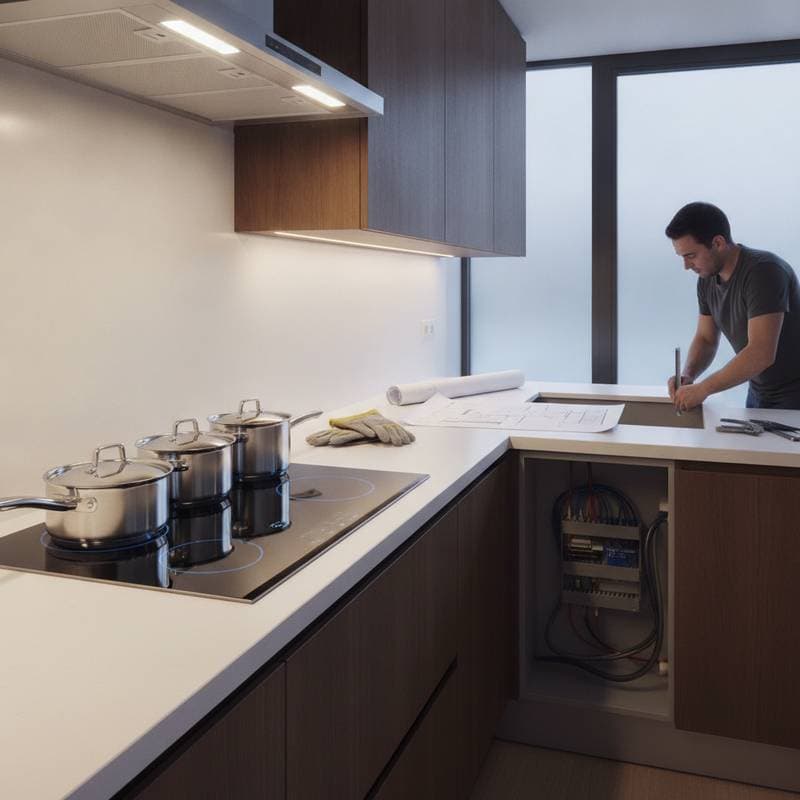
Contractors emphasize the critical role of proper setup. Zoned induction cooktops require dedicated electrical circuits and frequently higher amperage than conventional outlets supply.
Engage an electrician to confirm that the kitchen's electrical panel accommodates the demands. Older residences may necessitate panel enhancements. Neglecting this can result in frequent circuit interruptions or suboptimal operation. Improper wiring invariably incurs greater expenses in corrections.
Additionally, incorporate adequate ventilation. Although induction avoids open flames, generated heat and vapors require extraction. Effective downdraft systems or overhead hoods remain vital, particularly in open layouts.
Maintenance Practices
Upkeep for induction zone cooktops proves less demanding than for gas or electric counterparts. Spills fail to adhere and char, allowing cleanup with a moist cloth after cooling. Steer clear of abrasive substances or metallic tools that might damage the glass.
A notable advantage lies in extended service life with appropriate care. Internal elements involve minimal mechanical components, reducing failure points. The electronic control module represents the chief potential issue, underscoring the importance of selecting manufacturers with robust warranties and dependable support.
Cost-Benefit Analysis
Zoned induction cooktops qualify as premium investments. Initial pricing exceeds that of basic induction models, with potential added costs for electrical modifications. However, evaluation extends beyond upfront outlay.
Long-term advantages include energy efficiency, enhanced safety, and precise cooking capabilities. Households with young children value the relatively cool surface, which lowers burn hazards. Avid cooks appreciate professional-grade functionality. In terms of property value, such a feature elevates appeal in upscale kitchens.
Prospective buyers often highlight the seamless cooking expanse as evidence of innovative design and superior workmanship.
Selecting an Appropriate Model
When advising clients, prioritize these elements:
-
Coil Arrangement. Opt for configurations with sufficient independent coils matching typical cooking patterns. Expansive arrays provide greater versatility at increased cost.
-
Power Specifications. Review wattage per zone and overall capacity. Elevated ratings ensure prompt heating responses.
-
User Interface. Seek intuitive designs facilitating rapid modifications. Features like automated detection that tracks cookware relocation enhance usability.
Confirm warranty details and service accessibility. Reputable models include comprehensive guarantees and readily available components.
Integrating Induction Zones for Optimal Results
To incorporate induction zones effectively, assess cooking needs and consult professionals early in the planning phase. This approach maximizes flexibility, efficiency, and aesthetic appeal. Homeowners achieve a kitchen that evolves with their lifestyle, delivering enduring satisfaction and performance.