Universal Design Principles for Aging-in-Place Bathrooms in 2026
Creating a bathroom that accommodates every phase of life represents a strategic investment in residential well-being. This approach applies universal design to renovations, guest spaces, or new constructions, yielding environments that prioritize safety, functionality, and visual appeal. As a designer experienced in television projects and residential developments, the author observes that such designs enhance daily living without sacrificing sophistication.
Universal design avoids institutional aesthetics, focusing instead on versatile elements that adapt over time. The following sections outline methods to achieve this balance, ensuring the space remains practical and attractive for current and future needs.
Establishing a Flexible Layout for Long-Term Use
Universal design emphasizes foresight in layout to address evolving mobility requirements while preserving contemporary style. Designers recommend incorporating a minimum five-foot turning radius to facilitate navigation, particularly for wheelchair or walker users. This adjustment supports fluid movement in compact or expansive areas alike.
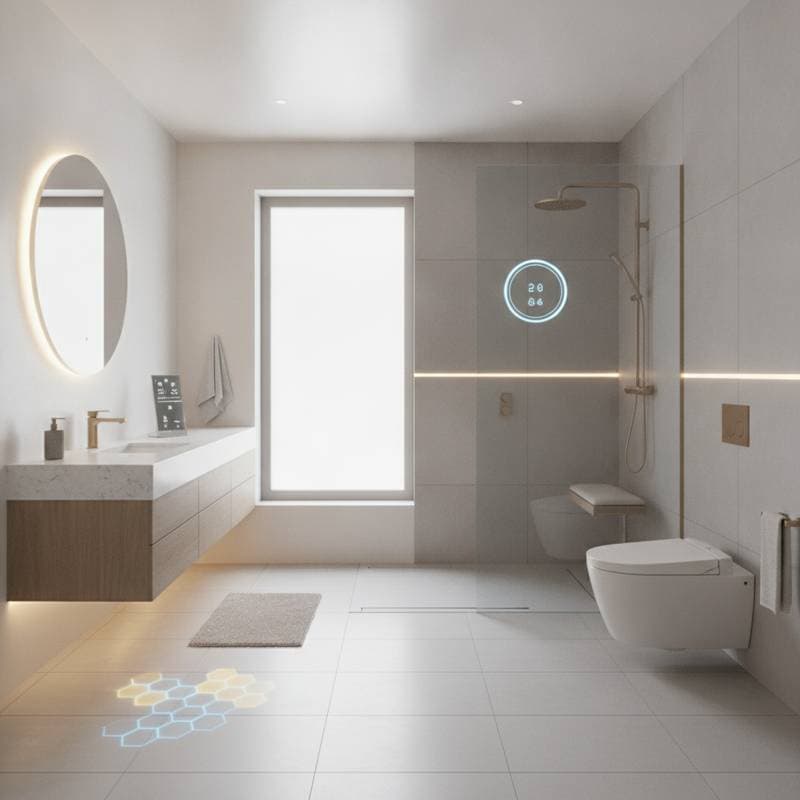
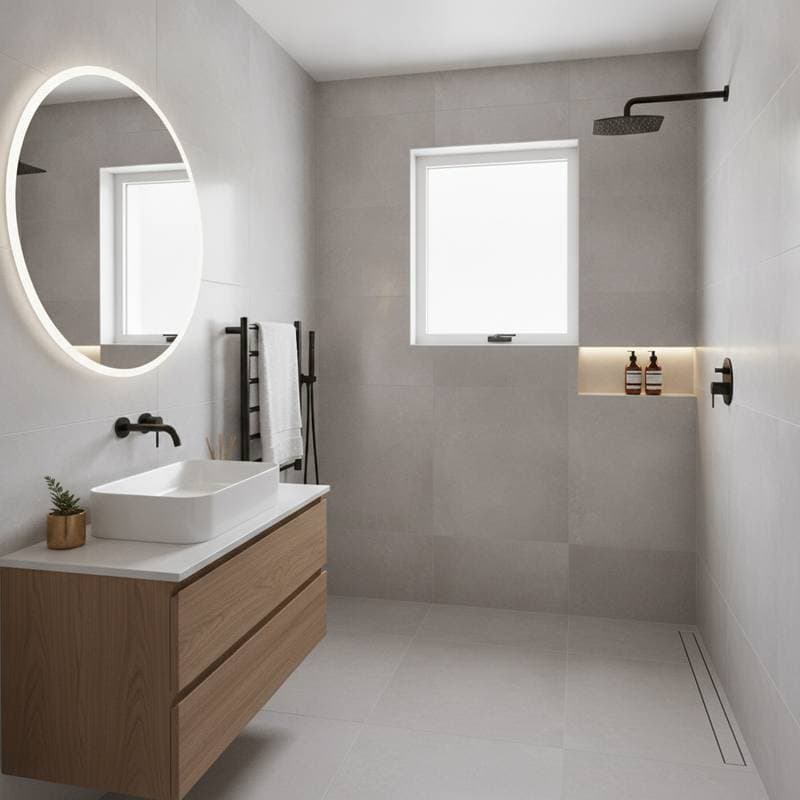
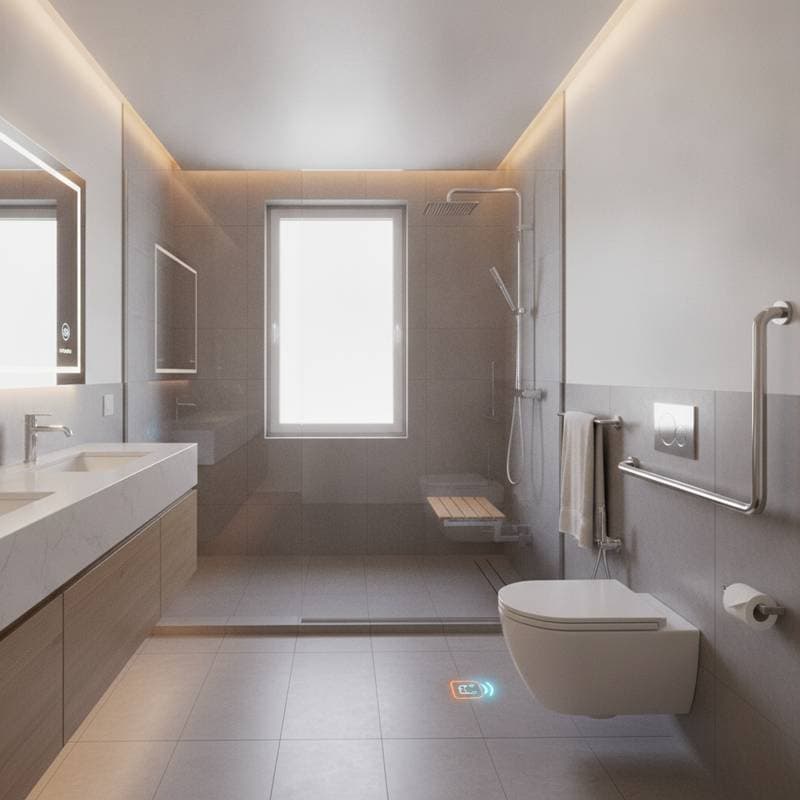
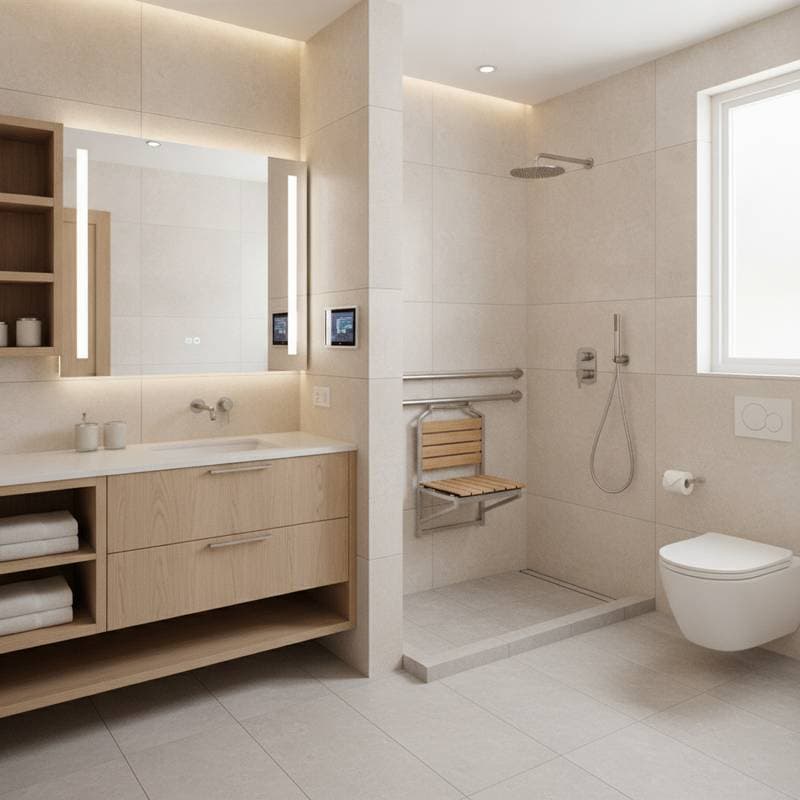
A curbless shower entry integrates seamlessly with the floor, reducing fall risks and enhancing visual continuity. Install a linear drain along the wall and apply a gentle floor slope of one-quarter inch per foot to manage water flow effectively. For projects with space constraints, prioritize these elements during initial planning to avoid costly retrofits.
In smaller bathrooms or on limited budgets, strategic preparations prove invaluable. Reinforce walls with blocking during construction to support future grab bar installations. This technique allows adaptations without structural disruption, extending the bathroom's usability across decades.
Selecting Adaptive Fixtures for Diverse Users
Fixtures in universal design bathrooms must serve users of varying heights, strengths, and mobility levels. Select components that adjust easily and integrate into multiple decor styles, from modern to classic.
Versatile Shower Configurations
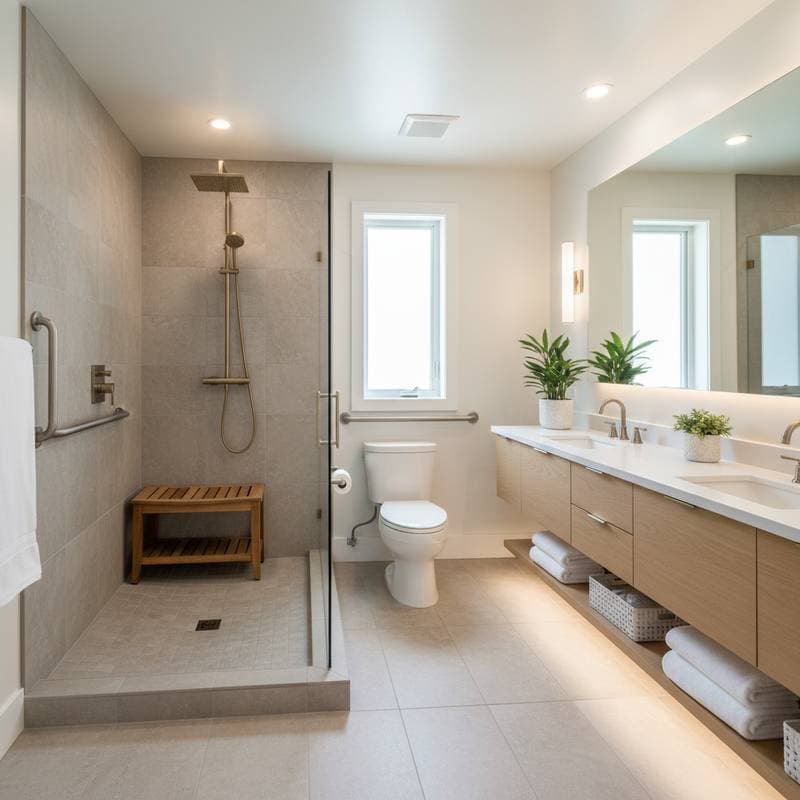
Install a handheld showerhead on an adjustable slide bar to accommodate standing, seated, or assisted bathing. Pair this with a fixed overhead shower for varied preferences. Incorporate a built-in bench or foldable teak seat to provide stable support during use.
Budget options start at two hundred dollars for basic kits from brands like Delta or Moen, while premium systems from Kohler exceed one thousand dollars and include thermostatic controls for consistent temperature.
Elevated Toilets for Ease of Access
Comfort-height toilets, positioned at seventeen to nineteen inches from the floor, simplify transitions for sitting and standing. These models mimic standard designs in appearance but offer enhanced ergonomics for all ages.
Basic units cost approximately one hundred dollars, with advanced versions featuring bidet functions or self-cleaning mechanisms ranging up to five hundred dollars. Ensure compatibility with existing plumbing to minimize installation expenses.
User-Friendly Faucets and Controls
Touchless faucets activate via sensors, minimizing germ exposure and physical effort. Lever-style handles provide an affordable alternative, requiring less grip strength than traditional knobs.
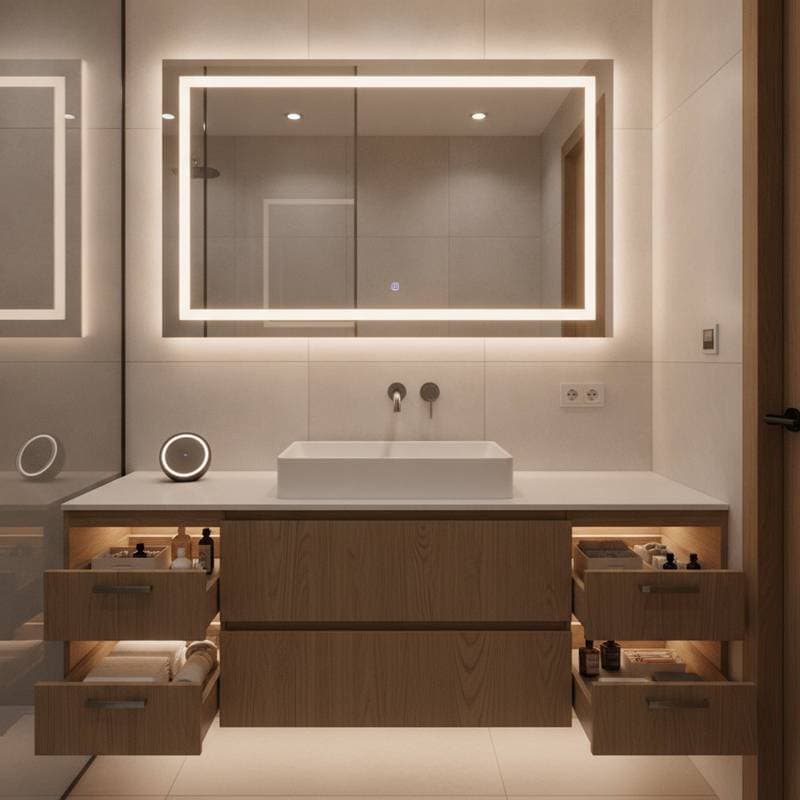
Both integrate into vanity setups with minimal alteration. Select finishes like brushed nickel or matte black to align with overall bathroom themes, ensuring durability and ease of maintenance.
Implementing Universal Design Across Budget Levels
Universal design principles scale to fit various financial scopes, making accessibility attainable for all homeowners. Focus on high-impact changes that deliver immediate and sustained benefits.
Affordable Modifications:
- Swap cabinet and door knobs for lever handles to improve operation for limited dexterity.
- Apply peel-and-stick grab bars or reinforced towel bars near the toilet and shower.
- Upgrade to LED lighting with high color rendering indexes for superior visibility.
- Place non-slip mats in the shower and bath areas, opting for machine-washable varieties.
Moderate Investments:
- Convert to a curbless shower using a linear drain and waterproof membranes.
- Replace flooring with textured porcelain tiles or luxury vinyl planks rated for slip resistance.
- Add motion-sensor lights under cabinets and touchless faucets at sinks.
- Install a comfort-height toilet alongside permanently mounted grab bars.
Premium Enhancements:
- Redesign the layout to include a five-foot by five-foot open space for mobility aids.
- Incorporate smart systems for voice-activated lighting, heated towel racks, and water temperature regulation.
- Fit adjustable-height vanities and radiant floor heating for year-round comfort.
- Apply high-end materials such as quartz countertops, marble surrounds, or handcrafted mosaic tiles.
Each tier advances the core objectives of safety and adaptability, tailored to individual priorities and resources.
Sustaining and Evolving Your Bathroom Design
After implementation, regular upkeep ensures the bathroom's features perform optimally over time. Inspect caulk, grout, and seals quarterly to prevent water damage and maintain hygiene. Refresh non-slip surfaces annually and test fixture mechanisms for reliability.
As technology advances, consider upgrades like energy-efficient LEDs or app-controlled showers to enhance functionality. These adjustments keep the space aligned with user needs and emerging standards.
Ultimately, a well-designed universal bathroom fosters independence and aesthetic pleasure for residents and visitors. This thoughtful integration of form and function creates enduring value, supporting healthier living environments.