AI Tools Unlock Your Perfect Interior Palette
Selecting the ideal color palette for an interior remodel presents one of the most challenging aspects of design. Homeowners often dedicate weeks to browsing paint swatches, only to discover later that a chosen color appears differently on the wall compared to the sample. Incorrect selections can render a space smaller, dimmer, or less inviting, with corrections leading to expenses ranging from hundreds to thousands of dollars. AI-powered color tools address these issues by enabling users to identify precise, coordinated palettes with greater speed and assurance.
The Problem With Traditional Color Selection
In remodeling projects, color extends beyond aesthetics to affect lighting, atmosphere, and overall quality perception. Conventional approaches depend largely on human judgment, which varies based on lighting, surface textures, and adjacent materials. For instance, a shade perceived as neutral gray in one setting may shift to blue or purple tones in another, particularly in areas like kitchens and bathrooms under artificial illumination.
Homeowners frequently encounter exhaustion from testing multiple samples. They purchase numerous paint testers, apply them to walls, yet remain unsure of the outcome. Once the full application occurs, the color may overwhelm the space in unexpected ways, necessitating additional labor and materials for changes. AI tools mitigate this by offering simulations of color performance in realistic conditions prior to any application.
How AI Color Tools Work
AI color-matching tools employ image recognition and predictive algorithms to assess lighting, textures, and materials within a space. Users upload a photograph of the room, and the system detects subtle undertones, contrasts, and saturation levels before suggesting complementary color schemes. These tools can tailor recommendations to desired atmospheres, such as warm and welcoming or sleek and contemporary.
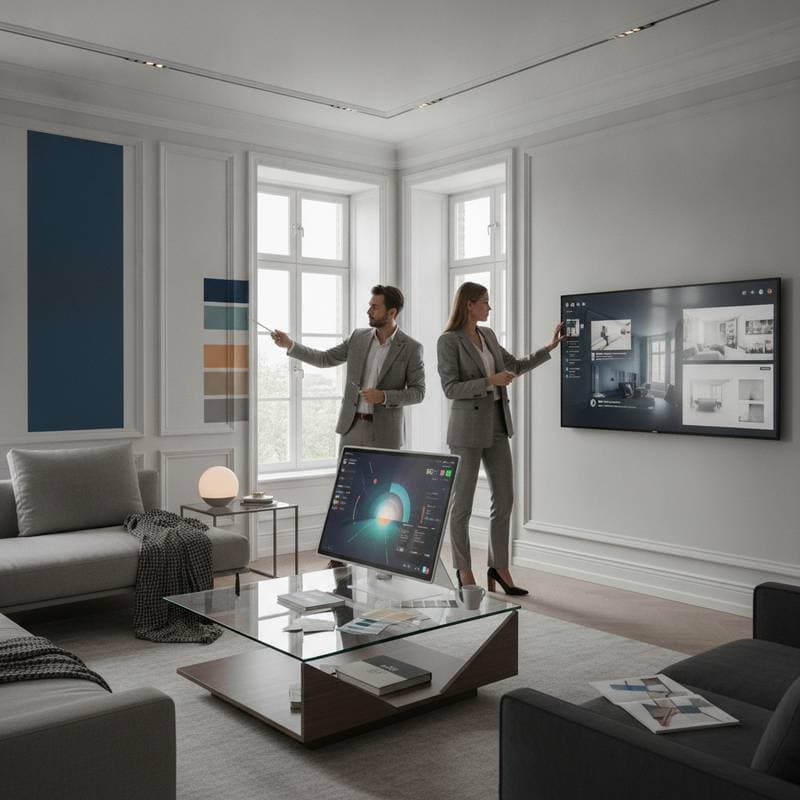
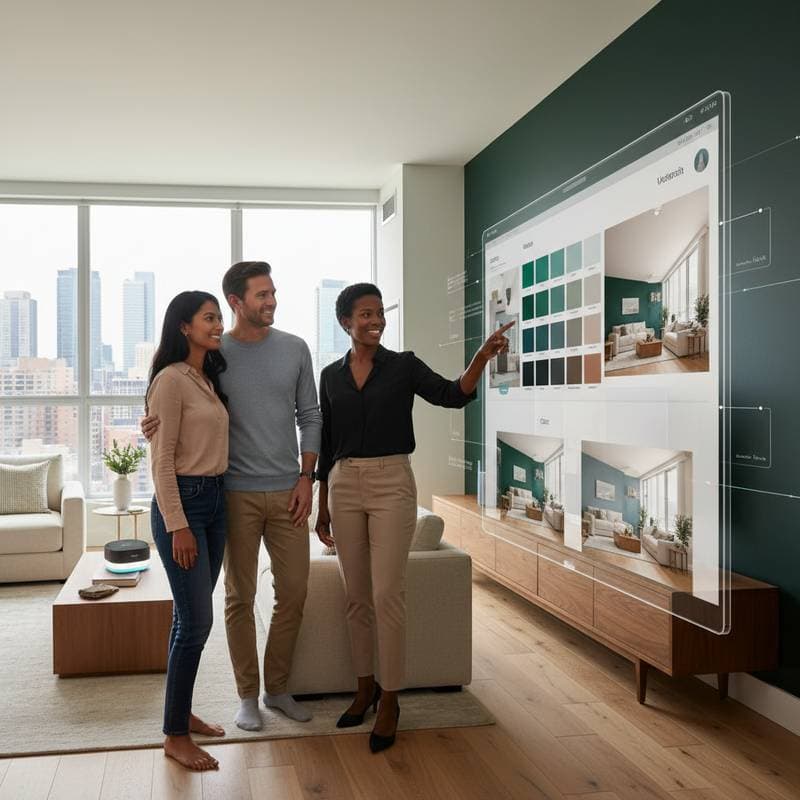
Advanced platforms connect to databases from leading paint brands, facilitating direct matches between virtual palettes and specific product codes. This seamless transition from concept to purchase minimizes uncertainty. Professionals often rely on these tools to validate selections with clients early, ensuring alignment and avoiding expensive adjustments.
Real-World Benefits for Homeowners
AI color tools provide more than convenience; they offer substantial safeguards. The following advantages appear consistently in practical applications:
-
Reduced Risk of Error
The algorithms evaluate lighting and surfaces with unwavering consistency, surpassing human variability. This precision helps identify potential issues like hidden undertones or excessive saturation that emerge only after complete coverage. -
Speed and Efficiency
Tasks that once required days of physical testing now conclude in minutes. Users receive multiple equilibrated palettes, adjustable in real time for immediate refinement. -
Accurate Visualization
Previews incorporate actual room elements, including shadows, reflections, and trim accents. Such detailed renderings empower decisive choices at the outset. -
Better Contractor Communication
Shared visual aids between homeowners and contractors minimize misinterpretations. Clear expectations maintain project timelines and reduce delays. -
Budget Protection
Each revision incurs additional costs in labor and supplies. Proactive use of AI tools averts such rework, preserving financial resources and yielding enduring results.
Common Misconceptions About AI Color Tools
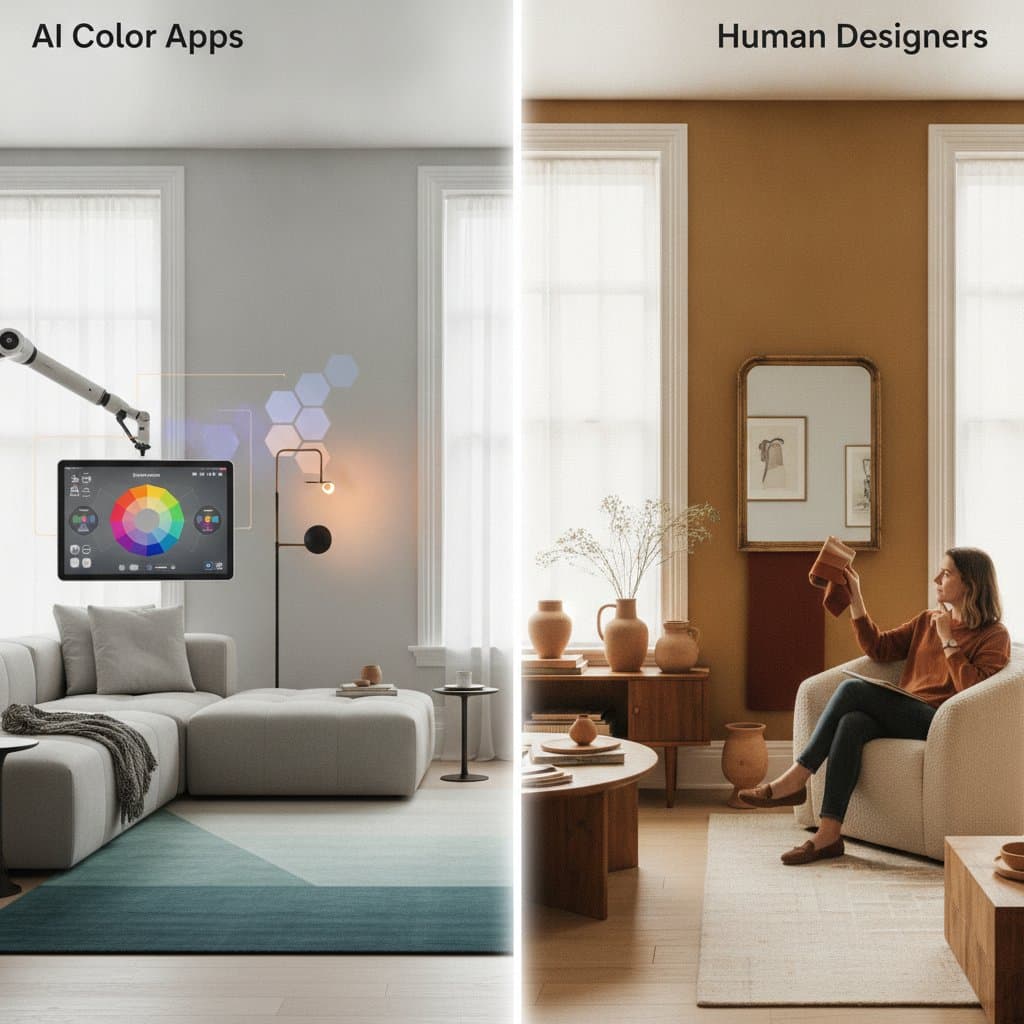
Certain homeowners believe these tools supplant the need for designers or contractors. In truth, they serve as supportive aids rather than final arbiters. While AI delivers objective recommendations, elements like lighting integration, texture choices, and stylistic harmony demand expert evaluation. Professionals typically incorporate AI during initial planning, followed by manual adjustments to align with specifics such as tiles, floors, and cabinetry.
Another frequent misunderstanding concerns accessibility for non-experts. Most interfaces prove intuitive, demanding no technical expertise. Available as mobile applications, they allow users to capture a room photo, select a stylistic preference, and obtain a refined palette promptly. Success hinges on accurate interpretation, where seasoned guidance proves invaluable.
Integrating AI Into the Design Process
To maximize effectiveness, adhere to a structured approach:
-
Start With Real Photos
Capture images of the space under both natural and artificial lighting. The tool's accuracy depends directly on the quality and representativeness of these inputs. -
Define the Mood You Want
Establish the intended emotional tone, whether serene, vibrant, or understated. This focus directs the AI toward suitable color families. -
Compare With Existing Materials
Include photos of current elements like flooring or countertops. This ensures the generated palette harmonizes with established features. -
Verify Paint Codes
Match suggested shades against tangible samples prior to buying. Variations in display screens can distort digital representations. -
Confirm With Your Contractor
Present the finalized palette to painters or builders. They offer insights on application needs, such as additional layers or primers for optimal results.
Preserving Color Choices for Long-Term Value
After selecting and implementing the palette, maintain detailed records of all codes, finishes, and techniques used. This documentation simplifies future touch-ups or expansions, preventing inconsistencies.
A thoughtfully selected color scheme enhances aesthetics while safeguarding investments through lower maintenance, superior light utilization, and increased property appeal. AI tools complement human expertise by supplying reliable insights and visualizations, fostering spaces that endure and inspire.